
When sourcing Vietnamese black pepper, one question often comes up: Why do different suppliers offer different prices for what appears to be the same product?
If you’ve requested a black pepper quotation from several exporters, you’ve probably noticed that the prices can vary considerably. At first glance, it may seem that one supplier is simply more expensive than another. In reality, the quotations are often based on different product specifications rather than different market prices.
One supplier may quote 500 G/L FAQ black pepper, another offers 550 G/L Machine Clean (MC), while a third provides 570 G/L ASTA. Although all three are Vietnamese black pepper, they differ in density, cleanliness, quality requirements and processing standards.
Understanding these differences is essential for importers, wholesalers and food manufacturers. It not only helps buyers compare quotations fairly but also reduces misunderstandings during production and shipment.
In this guide, we’ll explain what affects a black pepper quotation, why prices vary, and what information buyers should provide to receive an accurate quotation from Vietnam.
A black pepper quotation is based on specifications, not just market price
Many enquiries simply ask: “Please send your best black pepper quotation.”
While this sounds straightforward, it doesn’t give suppliers enough information to prepare an accurate offer.
Unlike commodities with a single market price, Vietnamese black pepper is available in many grades and processing standards. The final quotation depends on the exact product specification, packaging, testing requirements and commercial terms requested by the buyer.
Without these details, every supplier may make different assumptions. One may quote the most economical commercial grade, while another assumes you require premium export quality.
As a result, the quotations may look very different even though they all refer to “Vietnam black pepper.”
For professional sourcing, the specification should always be defined before the price is compared.
Density is one of the biggest factors affecting a black pepper quotation
One of the first questions an experienced supplier will ask is:
“What density do you require?”
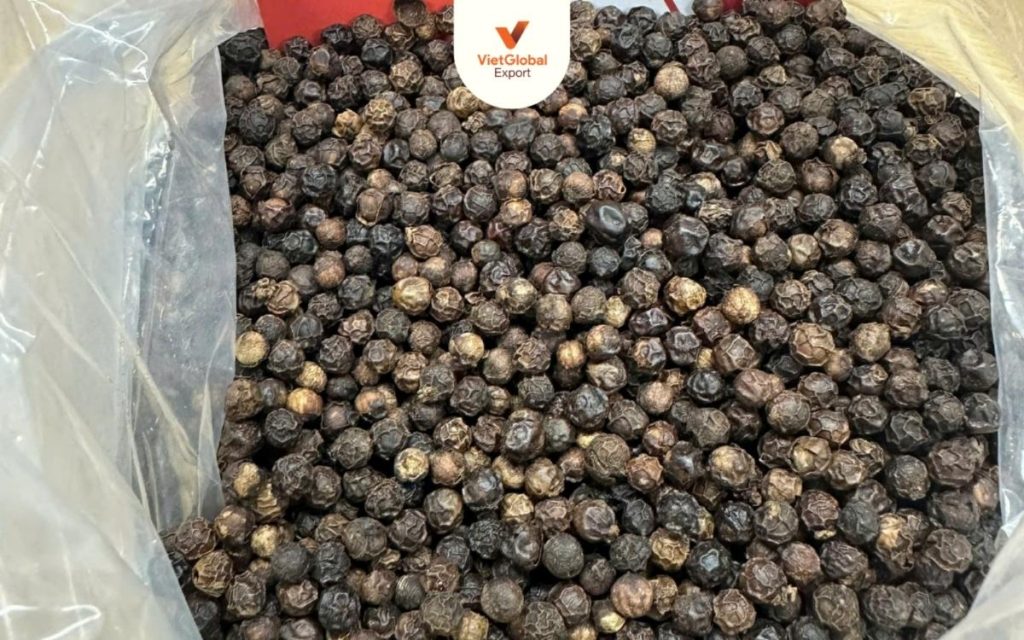
Density, measured in grams per litre (G/L), indicates how heavy and well-developed the pepper berries are. Higher-density pepper generally contains more mature berries, offering better appearance, improved consistency and stronger overall quality.
The most common export grades include 500 G/L, 550 G/L, 580 G/L and 600 G/L.
In general, higher density requires more careful raw material selection and therefore commands a higher price.
If buyers don’t specify the required density, suppliers may quote different grades, making it impossible to compare quotations fairly.
Cleaning standards also influence the peppercorn quotation
Even when two products have the same density, their prices may still differ because of the cleaning standard. Vietnamese black pepper is commonly supplied in three processing grades:
FAQ (Fair Average Quality)
FAQ is the standard commercial export grade. It usually allows a higher level of impurities and requires less processing, making it the most economical option for many wholesale markets.
Machine Clean (MC)
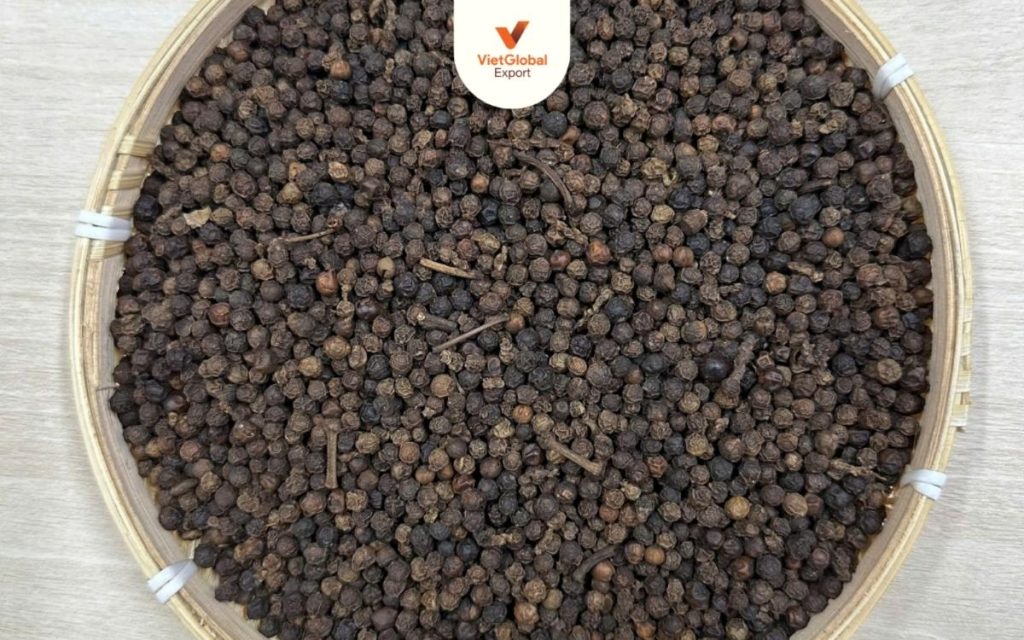
Machine Clean pepper goes through additional cleaning equipment to remove stems, dust, immature berries and other unwanted materials.
A typical Black Pepper 550 G/L MC specification includes:
- Density: Minimum 550 G/L
- Moisture: 12.5–13.5%
- Foreign matter: Maximum 0.2%
- Volatile oil: Minimum 2 ml/100 g
- Piperine: Minimum 4%
Because the product is cleaner and more uniform, Machine Clean pepper generally carries a higher quotation than FAQ.
ASTA
ASTA refers to products processed to meet the quality standards established by the American Spice Trade Association (ASTA). These products are commonly supplied to food manufacturers and importers serving the United States and other premium markets where stricter quality requirements apply.
The additional processing, inspection and quality control required for ASTA-grade pepper naturally increase production costs and influence the quotation.
Small specification differences can have a big impact on price
Besides density and cleaning level, several technical specifications also influence a black pepper quotation.
One of the most important is foreign matter, which refers to non-pepper materials such as stems, dust, stones and other impurities.
For example, pepper with 1% foreign matter is generally less expensive than pepper limited to 0.5%, while products specified at 0.2% maximum require much more intensive cleaning and therefore command a higher price.
In general, FAQ pepper commonly allows around 1% foreign matter, whereas Machine Clean and ASTA grades are typically supplied with 0.2% maximum.
Another specification buyers often consider is the percentage of light berries. These are immature or low-density pepper berries that reduce overall product consistency. A lower percentage of light berries usually indicates better raw material selection and higher export quality.
Moisture content also affects product stability during storage and transportation. Most export black pepper is supplied with moisture between 12.5% and 13.5%, depending on customer requirements.
For food manufacturers, additional quality indicators such as volatile oil content and piperine content may also be specified to ensure the product meets production requirements.
Although each specification may seem small individually, together they significantly influence the final quotation.
Packaging requirements can also affect your black pepper quotation
Packaging is another factor that buyers often overlook when requesting a black pepper quotation.
For most bulk exports, Vietnamese black pepper is commonly packed in 25 kg PP woven bags or kraft paper bags with an inner PE liner. These packaging options provide good protection against moisture during storage and ocean transportation and are considered the standard for international spice exports.
However, not every buyer requires standard export packaging.
Some importers prefer heavier-duty multi-layer bags for additional protection during long-distance shipping or repeated handling. Others require custom-printed bags with their own branding or private-label designs.
For retail markets, black pepper may also be packed into small pouches, jars, grinders or ready-to-sell consumer packs. These formats involve extra materials, filling, labeling and quality control, so they naturally result in a higher quotation than bulk packaging.
When requesting a quotation, buyers should clearly describe their packaging requirements. A quotation for pepper packed in standard PP bags is not directly comparable to one prepared for branded retail packaging.
Commercial terms also influence the quotation
Besides product quality, suppliers also need to know where the goods will be delivered and under which Incoterms.
For example:
- FOB Ho Chi Minh City
- CFR Hamburg
- CIF Dubai
Freight costs and insurance vary by destination, so suppliers cannot prepare an accurate quotation without this information.
Order quantity also affects pricing. Whether you’re purchasing sample quantities, one full container or multiple containers under a long-term contract, the quotation may differ because production planning and logistics costs change with volume.
How to request an accurate black pepper quotation
A well-prepared enquiry saves time for both buyers and suppliers.
To receive quotations that are accurate and easy to compare, buyers should include:
- Product (Black Pepper or White Pepper)
- Density (500 G/L, 550 G/L, 570 G/L or 600 G/L)
- Cleaning standard (FAQ, MC or ASTA)
- Moisture or other quality requirements, if applicable
- Packing format
- Quantity
- Destination port
- Incoterms (FOB, CFR or CIF)
- Expected shipment schedule
- Required documents such as a Certificate of Analysis (COA), Phytosanitary Certificate or laboratory testing
Providing these details allows suppliers to prepare quotations based on exactly the same specification, making price comparisons much more meaningful.
Better quotations lead to better sourcing decisions
A good black pepper quotation should do more than provide a price. It should clearly define the product specification, quality standard, packaging and commercial terms so both buyer and supplier share the same expectations before production begins.
At VietGlobal Export, we don’t simply send market prices. We work with buyers to understand their application, recommend suitable specifications and verify product availability before preparing each quotation.
This approach helps buyers compare offers more accurately, avoid unnecessary revisions and reduce sourcing risks throughout the export process.
We don’t just export – we represent you in Vietnam.
If you’re looking for an accurate black pepper quotation from Vietnam, share your specifications, destination and shipment schedule with our team. We’ll prepare a quotation based on the product your business actually needs – not just a generic market price.
