
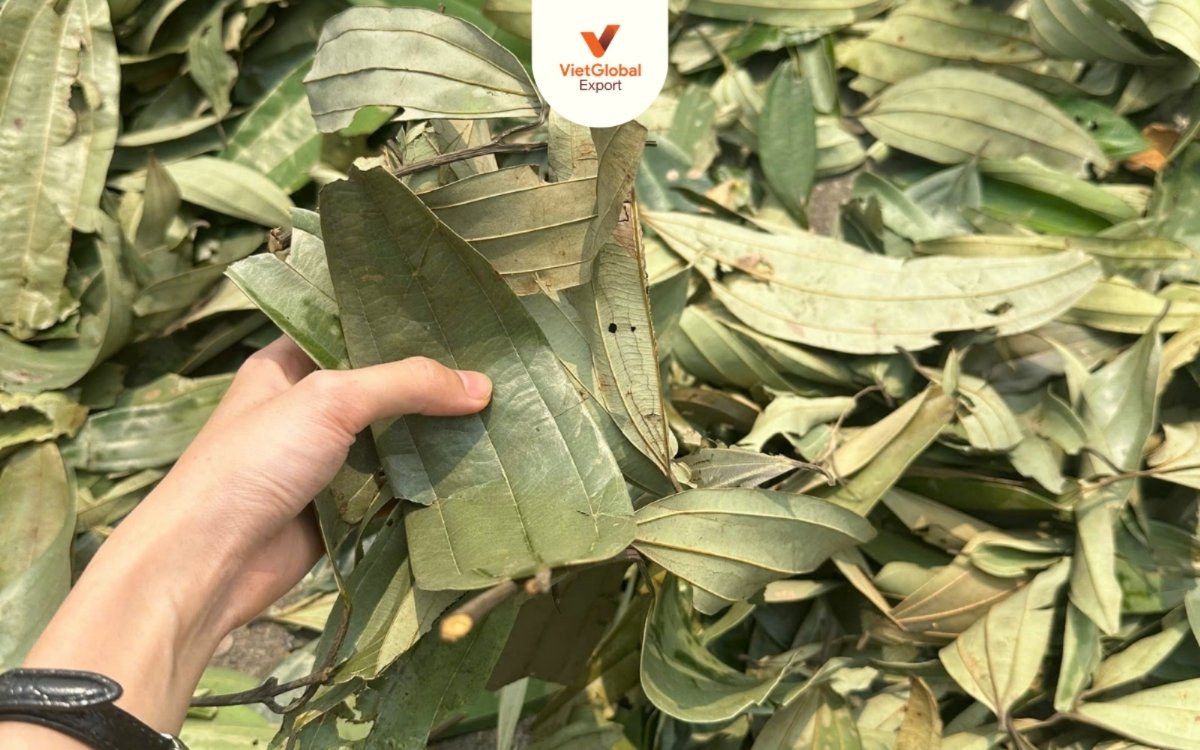
When sourcing dried aromatic leaves, buyers often receive quotations for cassia leaves, cinnamon leaves vs tej patta, Indian bay leaves and bay leaves as if they were the same product.
They are not always the same.
These names may refer to different plant species, origins, aromas and end uses. A misunderstanding at the quotation stage can result in unsuitable flavour, incorrect labelling, documentation problems or a shipment that does not match the buyer’s approved product.
For importers, wholesalers and food manufacturers, the safest rule is:
Do not purchase “bay leaves” or “cinnamon leaves” based only on the commercial name. Confirm the botanical name, origin, intended application and physical sample before placing an order.
Quick comparison
| Commercial name | Common botanical name | Typical aroma | Common use |
| Tej patta | Cinnamomum tamala | Warm, spicy, slightly cinnamon-like | Curries, rice dishes and spice blends |
| Indian bay leaf | Cinnamomum tamala | Warm, clove-like and mildly peppery | South Asian cuisine and food processing |
| Mediterranean bay leaf | Laurus nobilis | Herbal, savoury and slightly floral | Soups, sauces, stews and meat products |
| Cinnamon leaves | Leaves from a declared Cinnamomum species | Depends on species and origin | Food processing, extraction or distillation |
| Vietnamese cassia leaves | Leaves collected from Vietnamese cassia-growing areas | Strong, woody and spicy | Seasoning, essential oil production and industrial processing |
The most important difference is botanical identity.
Tej patta and Indian bay leaf usually refer to Cinnamomum tamala. Standard bay leaf normally refers to Laurus nobilis. “Cinnamon leaves” is a broader term that may describe leaves from several species within the Cinnamomum genus.
What is tej patta?
Tej patta, also written as tejpat or tejapatta, is a dried aromatic leaf widely used in Indian, Nepalese and other South Asian cuisines.
Its botanical name is generally identified as:
Cinnamomum tamala
Other commercial names include:
- Indian bay leaf
- Indian cassia leaf
- Tamala leaf
- Malabar leaf
Tej patta has a warm and spicy aroma. When crushed, it may release notes similar to cinnamon, clove and pepper. It is commonly added to biryani, pulao, curries, lentil dishes, spice blends and slow-cooked foods.
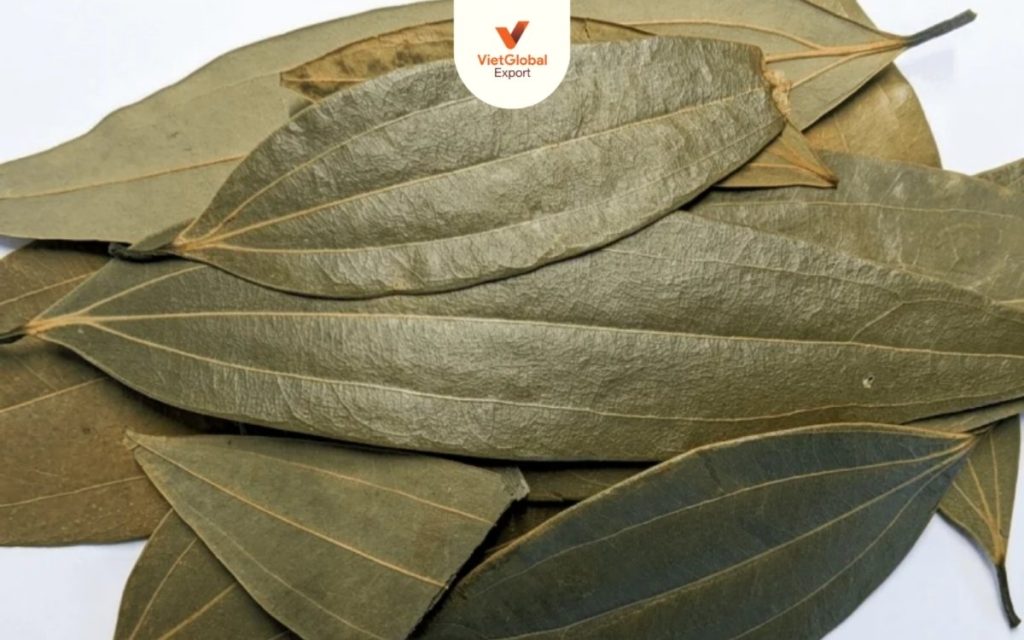
One of its most recognisable features is the presence of three prominent veins running lengthwise from near the base of the leaf.
However, three veins alone are not enough to confirm that a product is genuine Cinnamomum tamala. Other species in the Cinnamomum genus may have a similar vein structure.
For commercial orders, the botanical name and approved sample should take priority over visual inspection alone.
Are tej patta and Indian bay leaves the same?
In most international spice markets, yes.
“Tej patta” is the traditional South Asian name, while “Indian bay leaf” is the English commercial name. Both normally refer to Cinnamomum tamala.
However, buyers should still be careful. Some suppliers use the name “Indian bay leaf” loosely for aromatic leaves that look similar but come from another species.
A clearer purchase description would be:
Dried whole Indian bay leaves, botanical name Cinnamomum tamala, intended for food use.
This is more accurate than simply writing “bay leaves” in the RFQ or purchase order.
What are bay leaves?
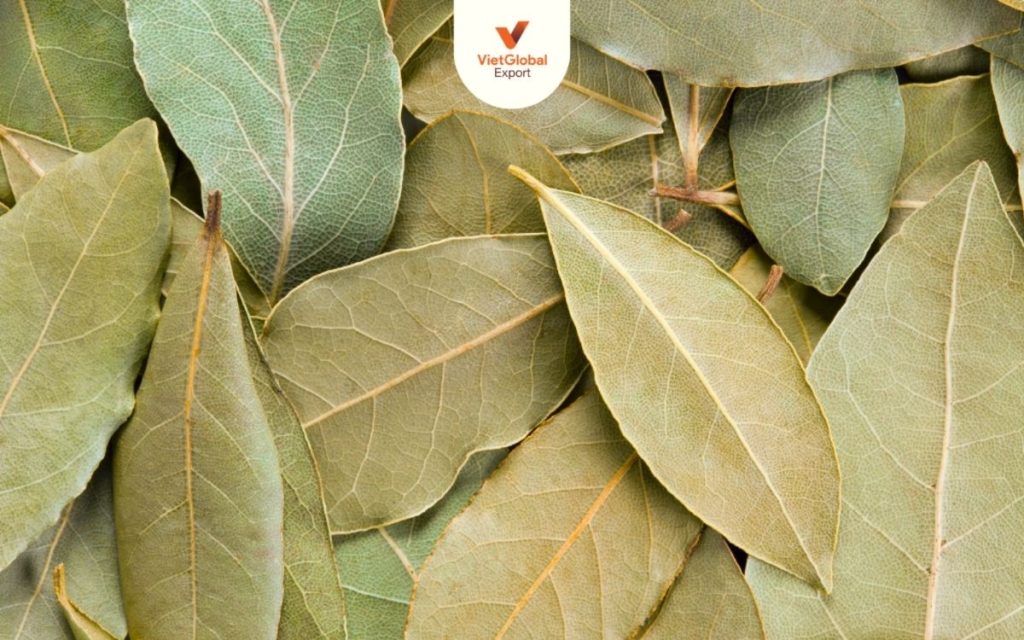
In European, American and many international food markets, “bay leaf” generally refers to:
Laurus nobilis
It is also known as:
- Mediterranean bay leaf
- Bay laurel
- Sweet bay
- Laurel leaf
- True bay leaf
Mediterranean bay leaves have a cleaner, more herbal and savoury aroma than tej patta. They are commonly used in soups, sauces, stocks, stews, processed meat, canned foods and seasoning blends.
Their visual appearance is also different.
Mediterranean bay leaves usually have one dominant central vein with smaller side veins. The leaves tend to be thick, leathery and narrower than many Indian bay leaves.
By contrast, tej patta often has three stronger longitudinal veins and a warmer, more cinnamon-like aroma.
The two products may be used in similar dishes, but they do not provide the same flavour.
What does “cinnamon leaves” mean?
“Cinnamon leaves” is a broad commercial term rather than a complete product specification.
It may refer to leaves collected from:
- Cassia cinnamon trees
- True cinnamon trees
- Cinnamomum tamala
- Other commercially cultivated Cinnamomum species
Different cinnamon species can produce leaves with different aromas, oil profiles and applications.
Some leaves are selected for culinary use. Others are mainly purchased for essential oil distillation, botanical extraction, fragrance production or industrial processing.
Therefore, an importer should not accept a quotation stating only:
Product: Cinnamon leaves
The supplier should also confirm:
- Botanical name
- Country and growing region
- Food or industrial grade
- Whole, broken, cut or crushed form
- Intended application
- Moisture level
- Stem and foreign-matter content
- Available laboratory testing
Without this information, two suppliers may be quoting completely different raw materials under the same commercial name.
Are Vietnamese cassia leaves the same as tej patta?
Not necessarily.
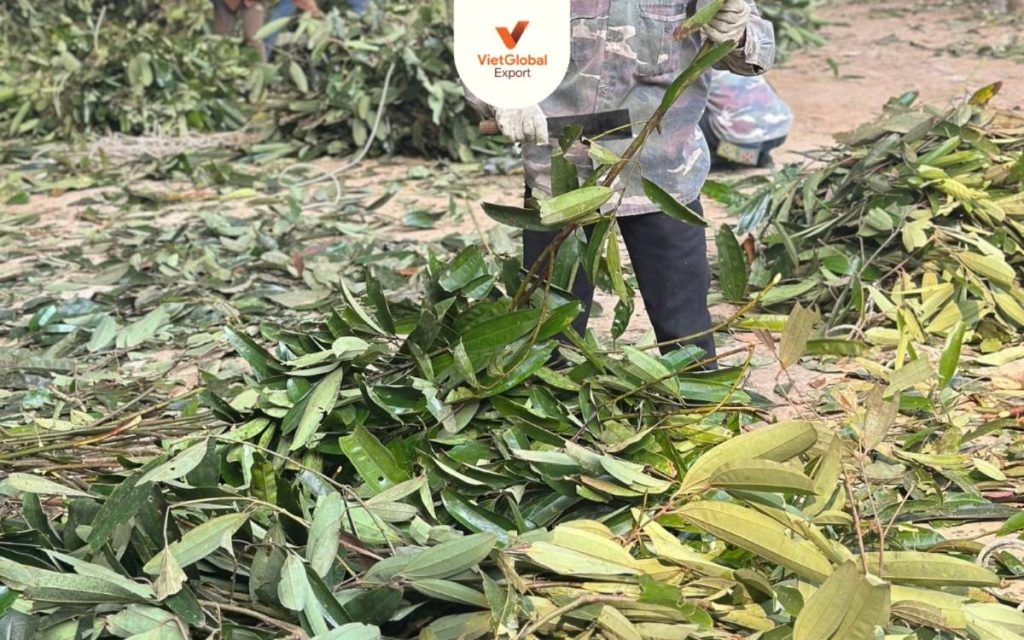
Vietnam is well known for cassia cinnamon, particularly from northern mountainous provinces such as Lao Cai and Yen Bai. Cassia trees provide not only bark but also leaves, branches, flower buds and other raw materials.
Vietnamese cassia leaves may look similar to tej patta because both come from plants in the Cinnamomum genus. The leaves can have an elongated shape, several strong veins and a warm spicy aroma.
However, visual similarity does not automatically mean that the leaves are Cinnamomum tamala.
In some markets, Vietnamese cassia leaves are commercially called “tej patta,” especially when buyers use the term as a general trade name for cinnamon-like leaves. This usage can be understood commercially, but botanical identity should still be clarified before the order is confirmed.
A buyer specifically requiring genuine Cinnamomum tamala should request botanical verification.
A buyer looking for Vietnamese cassia leaves for seasoning, extraction or essential oil production should focus on the declared species, sensory profile and technical specification instead of relying only on the name “tej patta.”
How to identify the products visually
Visual inspection can help buyers conduct an initial assessment, but it should not replace documentation or sample approval.
Tej patta or Indian bay leaf
Typical characteristics include:
- Long or oval leaf shape
- Three prominent veins running lengthwise
- Olive-green to brown colour after drying
- Warm, spicy and cinnamon-like aroma
- Stronger fragrance when crushed
Mediterranean bay leaf
Typical characteristics include:
- Narrow or elliptical shape
- One dominant central midrib
- Smaller branching side veins
- Thick and leathery texture
- Herbal and savoury aroma
Vietnamese cassia leaves
Characteristics may vary depending on species, growing area, harvest time and drying method. Common features may include:
- Elongated or broad leaf shape
- Noticeable longitudinal veins
- Green, olive, yellow-brown or dark-brown colour
- Strong cassia or woody-spicy aroma
- Whole leaves, broken leaves and stems in different proportions
Colour should not be the only quality criterion. Leaf maturity, weather conditions and drying methods can all influence the final appearance.
Why correct identification matters
Flavour and product formulation
Replacing Mediterranean bay leaf with tej patta can make a food product warmer, sweeter and more cinnamon-like.
Replacing tej patta with another cassia leaf may create a stronger, rougher or different aromatic profile.
For food manufacturers, even a small change in raw material can affect the final seasoning blend or recipe.
Intended application
Whole leaves for retail packaging usually require:
- Attractive appearance
- Uniform size
- Low breakage
- Limited stems
- Clean colour
- Food-grade handling
Leaves intended for distillation may be evaluated based on:
- Oil yield
- Aroma intensity
- Chemical profile
- Moisture
- Availability
- Processing cost
The most visually attractive product is not always the best material for oil extraction.
Documentation and customs
An unclear product name may create inconsistencies between:
- Commercial invoice
- Packing list
- Certificate of analysis
- Phytosanitary certificate
- Health certificate
- Product label
- Customs declaration
Importers should also confirm the appropriate HS code with their customs broker. Classification may depend on the product species, form, application and importing country.
What should importers include in an RFQ?
A professional request for quotation should contain more than product name and quantity.
Buyers should specify:
Product identity
- Commercial name
- Botanical name
- Country of origin
- Growing region, when relevant
Intended use
- Retail spice packing
- Food manufacturing
- Seasoning blends
- Essential oil distillation
- Botanical extraction
- Pharmaceutical or fragrance application
Product form
- Whole leaves
- Selected whole leaves
- Broken leaves
- Cut leaves
- Crushed leaves
- Ground leaves
- With or without stems
Quality requirements
- Moisture
- Admixture
- Stem percentage
- Broken-leaf percentage
- Leaf size
- Colour
- Aroma
- Foreign matter
- Mould or insect condition
For VGE’s standard cassia leaf offering, the reference specification includes moisture of 13.5% maximum, admixture of 1% maximum and standard packing in 30 kg PP bags. Final specifications and packing can be discussed based on the buyer’s application and destination market.
Food safety requirements
Depending on the destination, buyers may request testing for:
- Pesticide residues
- Microbiological parameters
- Salmonella
- Mould and yeast
- Heavy metals
- Mycotoxins
- Market-specific contaminants
The required limits should follow the importing country’s regulations and the buyer’s internal quality standards.
A better RFQ example
Instead of writing: Please quote your best price for bay leaves.
Use: Please quote dried whole leaves of Cinnamomum tamala for food use. Kindly provide origin, moisture, leaf-size range, stem content, broken-leaf percentage, packing, available certificates, recent photos and a representative sample.
For Vietnamese cassia leaves: Please quote Vietnamese dried cassia leaves for essential oil distillation. Please confirm botanical name, growing region, moisture, stem content, expected oil profile, available quantity and packing.
A detailed RFQ helps suppliers recommend the correct product and prevents buyers from comparing prices for materials that are not equivalent.
Sample approval before ordering
For the first shipment, buyers should request a representative sample and evaluate:
- Botanical declaration
- Leaf shape
- Vein structure
- Colour
- Aroma before and after crushing
- Flavour, when intended for food use
- Stem content
- Broken-leaf percentage
- Foreign matter
- Moisture condition
- Packaging
The approved sample should be retained as a reference for production and pre-shipment inspection.
For larger orders, buyers may also request laboratory testing, third-party inspection, pre-shipment sampling or loading supervision.
Frequently asked questions
Are tej patta and Indian bay leaves the same?
Yes. Both names normally refer to Cinnamomum tamala.
Are Indian bay leaves and Mediterranean bay leaves the same?
No. Indian bay leaves normally come from Cinnamomum tamala, while Mediterranean bay leaves come from Laurus nobilis.
Can cinnamon leaves replace bay leaves?
Not as a direct one-to-one replacement. Cinnamon leaves usually have a warmer and spicier aroma, while Mediterranean bay leaves are more herbal and savoury.
Are Vietnamese cassia leaves genuine tej patta?
Only when the botanical identity is confirmed as Cinnamomum tamala. Similar appearance alone is not sufficient.
Are Indian bay leaves the same as curry leaves?
No. Curry leaves come from a different plant and have a very different citrus-like flavour.
Final takeaway
The easiest way to distinguish these products is through their botanical identity:
- Tej patta or Indian bay leaf: Cinnamomum tamala
- Mediterranean bay leaf: Laurus nobilis
- Cinnamon or cassia leaves: leaves from a specifically declared Cinnamomum species
Commercial names are useful for communication, but they should never replace botanical names, technical specifications and approved samples.
Looking for cinnamon leaves from Vietnam?
VietGlobal Export supports international buyers in sourcing Vietnamese cassia leaves for food processing, spice distribution, extraction and essential oil distillation.
We do not just export spices. We work as your local partner in Vietnam, supporting product clarification, sample preparation, quality inspection, laboratory testing, packaging and shipment coordination.
Send us your intended application, destination market, required specifications and estimated quantity. Our team will help you identify the right product before quotation and shipment.
