
Crop quality improves in the North while prices soften in Central Vietnam
As Vietnam enters the early months of the year, the cassia cinnamon harvest season, locally known as the Spring harvest (Vụ 3) is now underway across key growing regions. For spice importers, this is an important period to understand how supply, quality, and pricing are evolving before making purchasing decisions for the coming months.
Cassia cinnamon harvest in Northern Vietnam
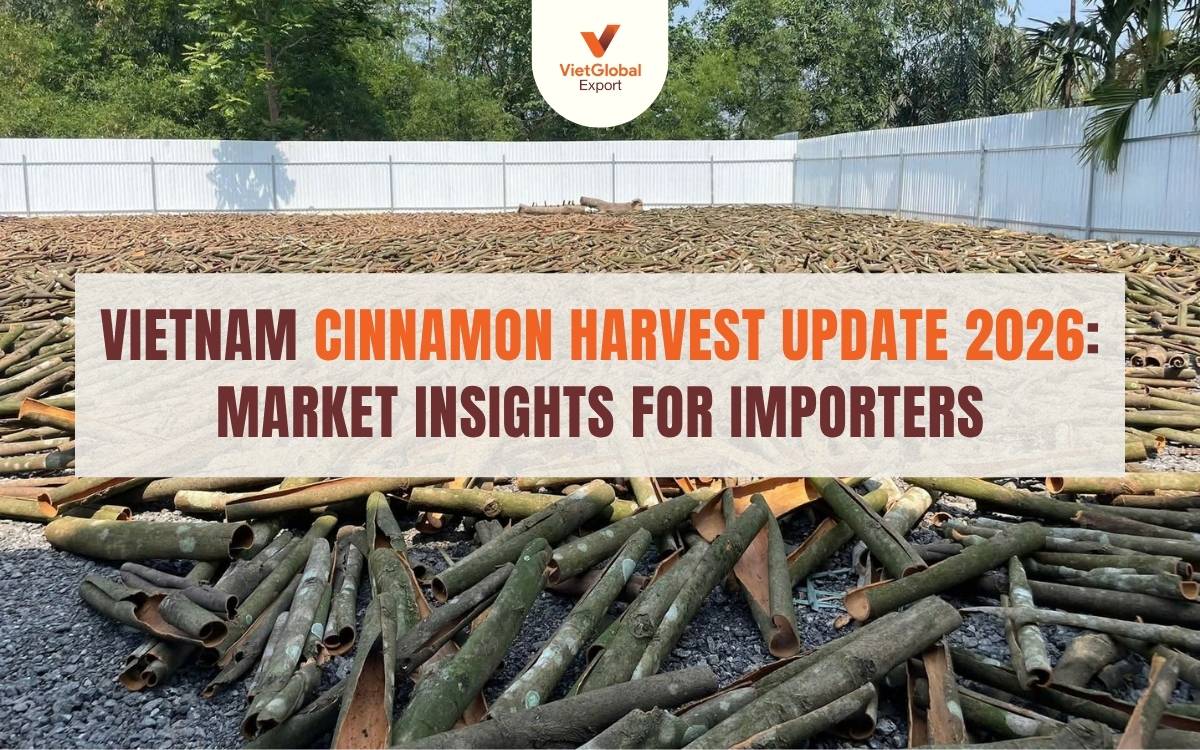
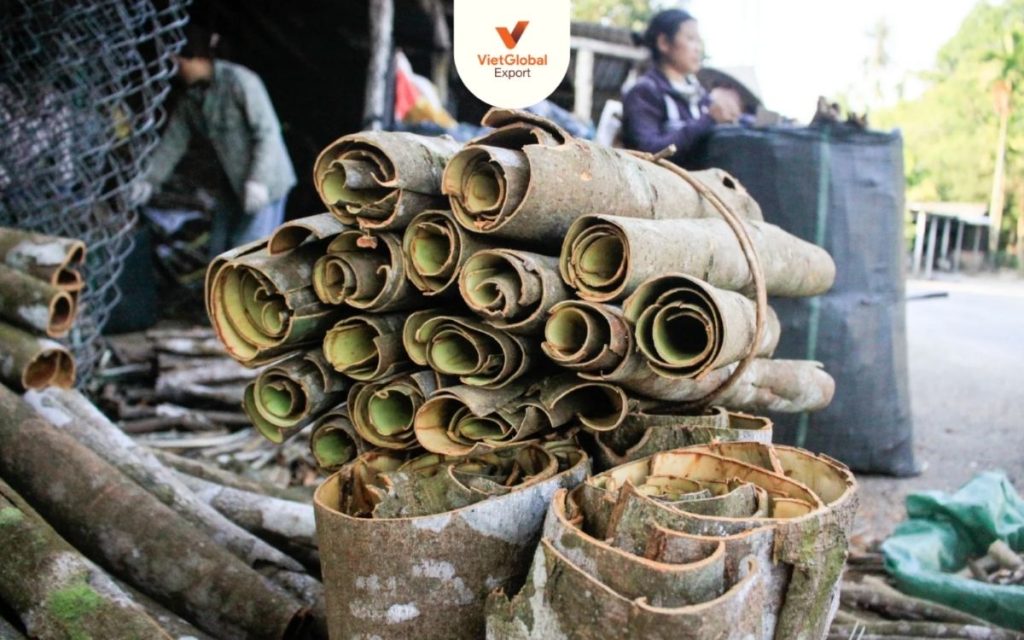
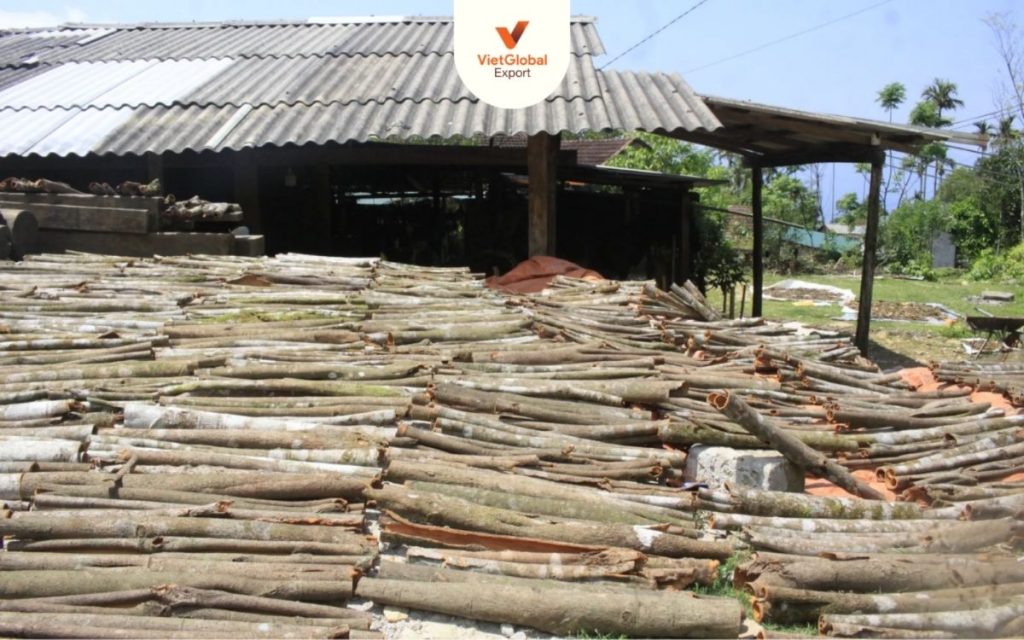
In Northern provinces such as Lào Cai and Yên Bái, the harvest is currently in full swing. Across the hillsides, freshly peeled cinnamon bark is being rolled into bundles and dried under the sun. This is one of the busiest periods of the year, with farmers taking advantage of favorable conditions to increase output.
Why the Spring harvest is important
Vietnam typically has two main cinnamon harvest seasons each year. The first takes place in early spring (around February to March in the lunar calendar), and the second occurs between August and October.
These periods are considered the best times for harvesting because the bark is easier to peel and the essential oil content is higher, which directly affects product quality and export value.
Favorable weather improves cinnamon quality
This year, stable weather conditions in Northern Vietnam have supported both harvesting and drying. As a result, the overall quality of cinnamon has improved noticeably.
Buyers can expect better color, cleaner bark, and more consistent oil content — especially in early-season material. For importers sourcing cassia sticks, split cassia, or broken cassia, this is a good stage to evaluate quality and begin securing supply.
Increasing supply from farms and processing facilities
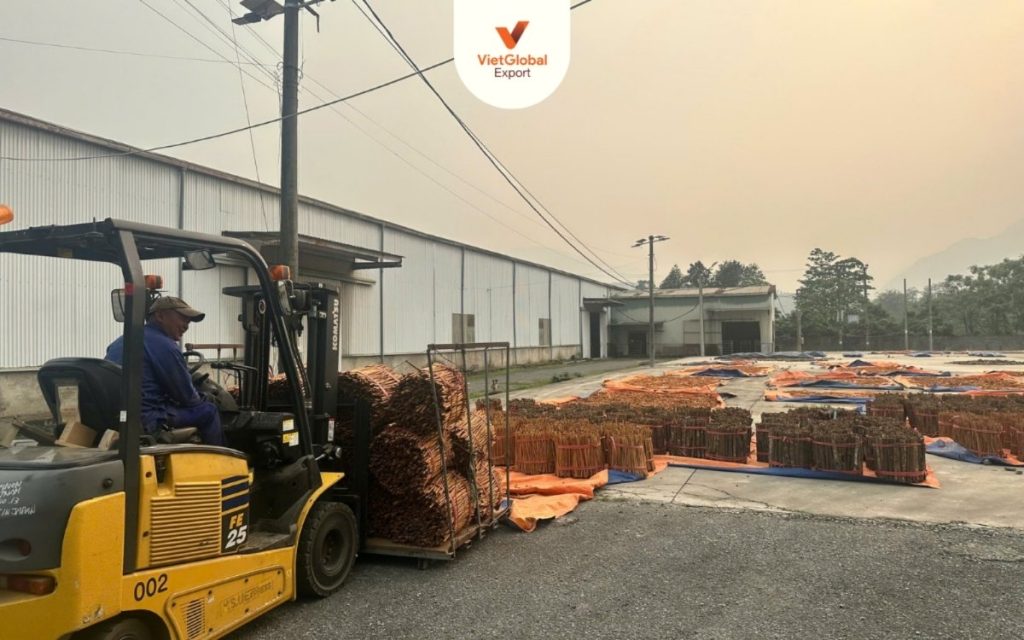
Harvesting activity has increased significantly in recent weeks. Farmers are mobilizing more labor to maximize output, while cooperatives and processing facilities are entering their peak production phase.
This creates a steady flow of raw materials into the market, supporting export supply during this period.
Cinnamon market situation in Central Vietnam (Quang Ngai)
In contrast to the North, the situation in Quảng Ngãi – Vietnam’s second-largest cinnamon-growing region, is more cautious this season.
Although harvesting has begun, activity is noticeably slower compared to previous years. The main reason is the sharp drop in cinnamon prices at the beginning of the season.
Current cinnamon price levels
Fresh cinnamon bark is currently traded at around 10,000–15,000 VND per kilogram, significantly lower than the 20,000–40,000 VND per kilogram range seen in previous seasons.
When considering the drying process, where roughly two kilograms of fresh bark are required to produce one kilogram of dried cinnamon, current price levels leave very limited profit margins for farmers.
Slower harvest due to price pressure
Due to lower prices, farmers are not harvesting aggressively. Instead, they are focusing on cutting only mature trees that meet quality standards.
This cautious approach helps maintain quality but may limit supply growth despite it being harvest season.
Vietnam cinnamon market outlook for importers
Supply and quality dynamics
The current cinnamon market shows a clear regional contrast. Northern Vietnam is experiencing active harvesting and improved quality, while Central Vietnam is facing slower harvesting due to pricing pressure.
This means that supply is available, but not excessive, and buyers need to focus more on quality selection rather than volume alone.
Price trend considerations
Although prices at origin are currently under pressure, the future direction remains uncertain. Market movements will depend on export demand, farmer selling behavior, and inventory levels in the coming weeks.
Long-term outlook for Vietnam cassia cinnamon
Vietnam continues to be one of the largest cassia cinnamon exporters in the world, with more than 147,000 hectares of plantations across the country.
Cinnamon plays an important role not only in generating stable income for farmers but also in supporting sustainable forestry and environmental protection.
However, the current price situation highlights a structural challenge: the industry still relies heavily on raw material exports, while value-added processing remains limited.
What spice importers should consider now
For buyers sourcing cassia cinnamon from Vietnam, this period is an important time to review procurement strategies. Early-season sourcing allows importers to evaluate product quality, monitor pricing trends, and secure supply before export demand increases.
In a market where both supply and logistics conditions can change quickly, timing often becomes just as important as price.
How VGE supports your cinnamon sourcing
At VietGlobal Export (VGE), we work closely with farmers, cooperatives, and processing facilities across Vietnam’s key cinnamon regions.
By staying connected to real-time harvest conditions, we help our partners make better sourcing decisions through reliable updates, quality control, and flexible supply solutions.
If you are planning to source cassia cinnamon from Vietnam, this is a good time to align your strategy and stay ahead of market changes.
