

The year 2025 marked a turning point for Vietnam’s spice industry. Instead of chasing export volume, the market moved decisively toward value, quality, and reliability. Climate volatility, tighter regulations, and changing buyer expectations reshaped how spices were produced, processed, and traded, pushing export value to record levels despite lower overall volumes.
This snapshot highlights how Vietnam’s key spice categories performed in 2025 and what global buyers should take away as they plan for 2026.
A YEAR DEFINED BY VALUE, NOT VOLUME
Across the spice sector, 2025 was shaped by supply pressure. Extreme weather events, delayed harvests, and stricter compliance requirements reduced available volumes. However, strong global demand and higher export prices more than compensated for these challenges.
The result was a clear industry-wide shift: lower export volume, but significantly higher export value.
This trend was most evident in pepper and cinnamon, Vietnam’s two most important spice exports, while niche spices such as star anise, ginger, turmeric, and black cardamom quietly gained momentum.

PEPPER EXPORTS 2025: “BLACK GOLD” AT RECORD PRICES
Pepper remained the backbone of Vietnam’s spice exports in 2025.
By the end of November 2025, Vietnam exported 225,009 tons of pepper, including 192,899 tons of black pepper and 32,110 tons of white pepper. Export volume declined 4.4% year-on-year and 7.7% compared to 2023, reflecting tighter supply conditions.
Despite this decline, total export turnover reached USD 1.515 billion, up 24.4% year-on-year, an increase of nearly USD 300 million.
The key driver was price. Average export prices over the first 11 months of 2025 reached:
- USD 6,618 per metric ton for black pepper, up USD 1,767 year-on-year
- USD 8,636 per metric ton for white pepper, up USD 2,175 year-on-year
These levels represent some of the highest average prices seen in recent years.
Market Shifts in Pepper Trade
While the United States remained Vietnam’s largest pepper market by volume, imports declined compared to 2024. In contrast, China and the UAE emerged as major growth drivers, reshaping regional demand dynamics. This shift highlights how Asian and Middle Eastern markets are becoming increasingly important for Vietnamese pepper exporters.
For buyers, 2025 reinforced an important lesson: price volatility is now closely linked to supply reliability, food safety, and processing quality — not just origin.

CINNAMON EXPORTS 2025: STABLE GROWTH AND GLOBAL LEADERSHIP
Cinnamon (cassia) continued to be one of Vietnam’s most stable and strategically important spice exports.
By the end of November 2025, Vietnam exported 108,929 tons of cinnamon, generating USD 272.6 million in export value. Compared to the same period in 2024, export volume increased 20.7%, while export value rose 9.4%.
Vietnam maintained its position as the world’s leading cinnamon exporter by value, with strong demand from India, the United States, Bangladesh, and South Asia.
Unlike pepper, cinnamon showed more balanced growth in both volume and value. However, buyers became increasingly selective. Demand favored cinnamon with:
- Higher essential oil content
- Clean appearance and consistent grading
- Clear traceability and controlled residue levels
This reinforced Vietnam’s role not just as a large supplier, but as a quality-driven cinnamon origin.

STAR ANISE: A RARE SPECIALTY WITH STRONG CONFIDENCE
Vietnam remained the second-largest exporter of star anise globally, after China.
Although export value experienced slight adjustments in line with global market conditions, Vietnamese star anise continued to enjoy strong confidence in high-standard markets. Notably, imports to the United States increased sharply, while demand from India and the Middle East remained steady.
Star anise from Vietnam – particularly from northern regions such as Lang Son — is valued for its high essential oil content, making it suitable for pharmaceutical, food, and premium spice applications in the EU and US.
GINGER, TURMERIC, AND BLACK CARDAMOM: EMERGING VALUE DRIVERS
Beyond the main spice categories, 2025 highlighted growing opportunities in so-called “niche spices.”
Exports of ginger and turmeric to health-focused markets such as Japan, South Korea, and the EU continued to grow. While total volumes remained modest, value-added formats including dried whole ginger, sliced ginger, and curcumin-rich turmeric powder, achieved prices 30–40% higher than raw materials.
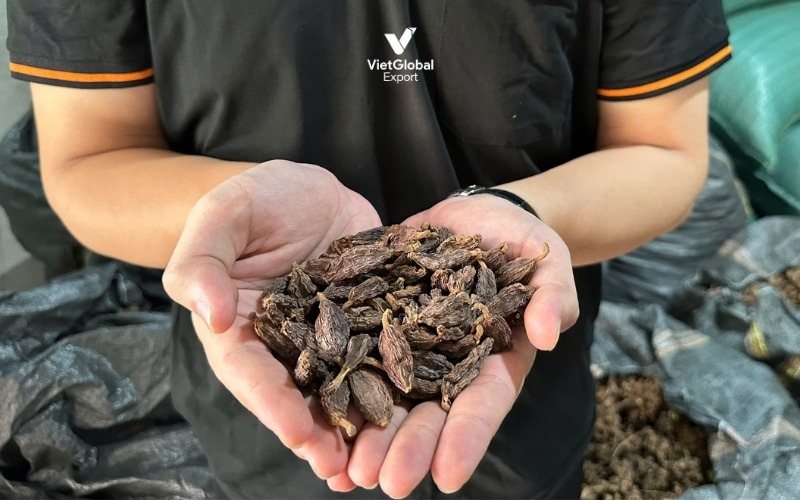
Black cardamom remained an important export for China and Middle Eastern markets, while gradually expanding its presence in Europe and North America. These products benefited from the global shift toward natural ingredients and functional foods.
WHAT 2025 MEANS FOR BUYERS AND SUPPLIERS
The most important takeaway from 2025 is clear:
Global buyers are no longer sourcing spices based on volume alone, they are sourcing reliability.
Suppliers who can offer transparent specifications, consistent quality, proper documentation, and proactive communication are best positioned to succeed in the next growth cycle.
As Vietnam’s spice industry continues to mature, the focus will increasingly shift toward value creation, not volume expansion.
KEY CHALLENGES AND OPPORTUNITIES AHEAD
Challenges
- Climate volatility impacting yields and harvest timing
- Stricter EU regulations on pesticide residues and sustainability (EUDR)
- Fragmented farming structures and inconsistent quality in some regions
Opportunities
- Stronger buyer focus on quality, food safety, and consistency
- Rising demand for processed, certified, and traceable spices
- Higher willingness to pay for reliable supply and long-term partnerships
THE VGE PERSPECTIVE
At VietGlobal Export, 2025 reinforced our core role as a trusted local partner. Beyond exporting spices, we support buyers with on-the-ground sourcing, quality control, processing coordination, and logistics planning, helping them navigate a more complex but opportunity-rich spice market.
Looking ahead to 2026, Vietnam remains a key origin for buyers who value stability, transparency, and long-term collaboration in their spice supply chains.
Thank you for walking this journey with us throughout 2025. We look forward to building even stronger partnerships together in 2026 🤍
